Monday, April 11, 2011

SAV-ON Crew Continues Tradition of Volunteering at Northwest Harvest

SAV-ON employees and family after helping out at Northwest Harvest.
Again in March, SAV-ON Insurance management, employees and even some of their children volunteered their time helping prepare food for the hungry at the Northwest Harvest warehouse in Seattle. They were put to work on the assembly line, scooping oats and putting them in bags, then placing the bags on the carousel where the bags were sealed and tossed onto a table. From there, other volunteers loaded boxes with the bags and weighed them. From there the bags are sent out to food banks around the area, helping to feed some of the thousands of hungry people that Northwest Harvest helps each month.

Volunteer work at Northwest Harvest has become a tradition for folks at SAV-ON, and employees and their families are eager to help as much as possible. This time, after a day’s work, they arrived at Northwest Harvest at 5:30 p.m. for their shift, and worked so diligently that they finished their work 15 minutes early!

One of our youngest volunteers, Breanna, was a big help, grabbing as many bags of oats as she could hold as soon as they were in the bags, and quickly delivering the bags to the waiting bag sealers. Breanna’s mother also volunteered, and she is the Des Moines agent Melodi Wheeler’s sister. Quite a family!

A special thanks to all the volunteers for their wonderful service to the less fortunate in our community!

SAV-ON is committed to helping Northwest Harvest in other ways, too. Every time someone refers a friend or family member to SAV-ON Insurance for a quote, we donate $1 to Northwest Harvest. We raised $216 in the first quarter of 2011, and that brings our total donation to more than $2,200 since we began the program a little more than a year ago!

Remember, every time you refer someone to SAV-ON Insurance for a rate quote, you’re contributing to Northwest Harvest! It's easy, just have them go to www.sav-on.com for a Quik Quote!
 

Tuesday, March 8, 2011

Wearing Lap and Shoulder Belt Saves Lives

In the past 40 years, new vehicle safety standards and more sophisticated safety equipment in U.S. automakers has saved an estimated 300,000 lives! One and only one of those safety features saved more than half of those lives – seatbelts!

We all know people who refuse to wear their lap and shoulder belts, either because it’s uncomfortable, or it’s some sort of governmental intrusion into our lives. But, the fact is that seat belt use is not only the law (Click it or Ticket), but also a very smart, life-saving piece of equipment.

Most Washingtonians understand this, as a national Seatbelt Safety Study in 2006 found that only 10 states achieved seatbelt useage of 90 percent or higher, and Washington state had the highest number of individuals who used their seatbelts at 96.3 percent!

While technology keeps bringing us new safety features designed to protect us while on the road, the good old seatbelt continues to be the number one safety feature you can have in your automobile. Use it, and insist that every passenger use theirs before leaving your driveway!

Children and Seatbelts

Auto accidents are the number one killer of children ages 4-14. In 2005, and average of five children died each day and another 640 were injured!

The main reason for these awful statistics is the improper use of seatbelts, booster seats and child restraints. Almost everyone buckles up their infants and small children when in the car, but problems occur when they are not buckled properly. When purchasing a children’s car seat or booster seat, make sure to read the instructions carefully. For instance, an infant or small child should never be placed in a front seat, regardless of the type of car seat they’re in. In the event of an accident, an air bag will deploy at around 200 miles per hour, and will severely injure or kill a small person.

All infants should be securely strapped in their car seat – facing towards the rear of the car! In an accident, the back support of the car seat will help protect them from catastrophic injury, especially to the head and neck area. Even children who have outgrown a car seat, but are less than 80 pounds, should remain in the back seat in a booster seat with a lap and shoulder belt securely fastened.

A recent study found that only 10-20 percent of children who should be in a booster seat actually use them. A child in a booster seat is 59 percent less likely to be injured than a child restrained by a seatbelt alone!

Courts Rule U.S. Automakers Liable for Lack of Automotive Safety

The Supreme Court ruled recently that United States automakers can be sued for failure to install the most effective safety equipment in their vehicles.

The court’s decision means a California man can now sue Mazda Motors after his wife died after the lap belt she was wearing caused her body to jackknife in an accident in which she was a passenger in the middle of the back seat. The Mazda she was riding in had no shoulder restraint in that seat, and she died from severe abdominal injuries and internal bleeding.

The Supreme Court’s decision was a surprise reversal of a lower court’s ruling that said automaker’s were protected against lawsuits for failing to install immediately install air bags in all their vehicles.

The court’s reasoning was that lawsuits filed by injured motorists can lead to safer products. This ruling indicates a clear change of direction regarding automaker safety requirements. Every lower court had determined that federal rules pre-empted lawsuits by accident victims over seat-belt design. As of 2008, there are more than one million cars on the road  that have at least one lap-only belt.

Sources: http://safety.lovetoknow.com, http://www.fairwarning.org

Wednesday, February 23, 2011

Jaywalking: Is It Worth the Risk?

Jaywalking is both illegal and dangerous -- a pedestrian is killed every 3-1/2 minutes in the U.S. -- yet many people admit to doing it frequently, a recent PEMCO Insurance poll has discovered.

What exactly is jaywalking? It occurs when a pedestrian crosses a street or highway outside of a marked crosswalk, or uses a crosswalk before the walk signal indicates it's safe to proceed. It is illegal in Washington state, and can result in a fine of between $50 and $100, depending on the circumstances.

With more than 622 pedestrians killed in traffic-related accidents in Washington in the past decade, you would think people would be more wary, but the recent PEMCO poll found that nearly one-third (31%) of Washington drivers admitted to jaywalking, despite national data that shows 20 percent of pedestrian deaths are due to illegal crossing attempts.

Even though many of the respondents admitted to jaywalking, 70 percent of drivers surveyed agree that jaywalkers should be ticketed for failure to obey the law when crossing streets or intersections.

The PEMCO poll also revealed that while 33 percent of respondents think the law favors pedestrians over drivers, a vast majority (81%) favored consequences for drivers who fail to yield for pedestrians legally crossing the street.

According to the Revised Code of Washington (RCW), vehicles must stop for pedestrians crossing roadways within both marked and unmarked crosswalks.  When turning through a crosswalk, vehicles must also yield to pedestrians until they are a safe distance away. Drivers who fail to yield under those circumstances can be cited with a traffic ticket and fine, according to the law.

Offenders Typically Younger

Drivers under 35 wanted more lenient laws against jaywalking, according to the PEMCO poll. It revealed that 43 percent of these younger drivers admitted to jaywalking at least some of the time. Predictably, about one-third of these same drivers thought jaywalkers should go unpunished if caught.

Men were more likely than women to cross illegally, 37 percent to 26 percent. The poll also found a possible correlation between jaywalking and aggressive driving. Those who often or sometimes jaywalk are more likely to speed, tailgate or fail to yield than others.

Source: PEMCO Insurance Northwest Poll, 2011

Thursday, February 10, 2011

Be Aware: You May Not Be Covered When Using Your Personal Car for Business Purposes

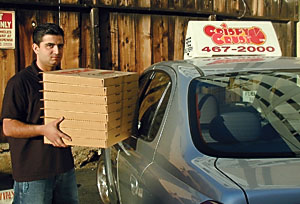
There are lots of drivers out there who are driving around with personal auto insurance, but making money doing it, either by delivering something or someone, or providing a service that they get paid to do. They may not know it, but if they have an accident while doing this, their insurance company probably won't cover their claim!

Why? Because they don't have a commercial auto policy, which is required for any driving that is done for "business purposes".

If your employer lets you use a company car, then they are responsible for paying to insure it. You have nothing to worry about, since you are covered in the event of an accident while on the job. However, some companies expect employees to use their own vehicles when they’re on company business. This gray area between business and personal use raises a number of questions, and you don’t want to be without the proper coverage if you are involved in a car accident. It can get expensive!

If you don’t actually deliver a product, what constitutes “business purposes”? Some insurance companies define it as transporting goods for money. That could include activities such as:
  • Daycare/church bus or van services
  • Door-to-door consulting services
  • Catering
  • Landscaping or snowplowing services
Some companies even consider real estate agents as using their cars for commercial purposes. You need to ask your insurance agent now, so you don’t get denied if you file a claim down the road.

A good rule of thumb is if you’re using your car more than 50 percent of the time for business (to make money), then you probably need a commercial auto policy.


If you drive around all day making sales calls, you may only need to increase the liability limits on your personal auto policy. However, if you get direct compensation from the use of your car, such as making deliveries or using it as a taxi service, then you need a commercial auto policy. It may mean higher rates, but if you fail to divulge this to your insurance company and then you’re involved in an accident, the company may deny your claim if it discovers you withheld that information.

Using a Personal Car on Company Business

Big companies typically have commercial auto policies that cover employees while they’re traveling on company business. If you have an accident in this situation, you may have to file a claim with your own insurance company, but it’s also possible your employer’s insurance will pay. Check with your employer AND your personal insurance agent in advance so that you know where to turn in the event of an accident. You don’t want to be caught in the middle while the two companies point fingers at each other!

If you have an accident while on a business trip in your own car, make sure the insurance adjuster is aware that was a business-related trip. Your personal auto insurance provider shouldn’t deny your claim just because you were on a business, although it may try to recover the money from your employer’s insurance company.

How do you know if you need commercial vehicle insurance? 

Here are some important questions:

• What are your limits on liability? A commercial auto policy offers higher liability limits because a company has more assets to protect than most individuals, so the limits need to be higher. In addition, most commercial vehicles are larger than passenger vehicles, so they can cause more damage. If you have a large commercial-type vehicle that you use for work purposes, then you probably need a commercial automobile policy.

• Will your insurance policy cover damage your vehicle causes while you’re on the job? While a personal policy won’t, a commercial policy will.

• Do you have employees who drive your vehicle? If other people drive your vehicle for any work purposes, you need commercial insurance.

You also need a commercial automobile policy if the vehicle hauls tools or equipment weighing more than 500 pounds, makes deliveries or requires filings for interstate for-hire trucking businesses.

Don’t be caught driving a personal car for business-related activities while only carrying a personal auto insurance policy. The cost may be less, but if you are in an accident and it is determined to be work-related, your claim will be denied. That will end up costing you many times more than the commercial rate you would’ve been paying!

If you would like to find out if you need commercial auto insurance, one of our SAV-ON Insurance agents would be happy to help. Call 1-888-867-2866.

Sources: www.carjunky.com, www.insure.com, www.irs.gov

Monday, January 17, 2011

Cell Phones: Both a Blessing and a Curse

The Blessing

Cell phones have become a standard equipment for many of us, as calling or texting has improved communication greatly. Not only do Mom and Dad have cell phones, but most of the kids do, too. Parents can keep track of their kids, business people can stay in touch with their customers -- whether they're sitting at their desk or out in the field -- and low-cost long-distance plans keep people in touch with distant friends and relatives that in the past was impractical and costly.

The Curse

Of course, there is a downside to the ubiquitous cell phone, such as when people in restaurants, movie theaters, or on public transportation loudly converse on anything and everything about their lives in public, ignoring the fact that most people don't care to hear it, or worse, are offended by it. Like most new technology, it's a lack of etiquette and courtesy on the part of the user that causes the problem, not the device itself. If you use a cell phone, please be aware that people around you may not want to hear your conversation, and find someplace private to talk. Just because you can talk just about anywhere, it doesn't mean you SHOULD. We don't want to know what you're planning for dinner. Really.

Hands-Free

For drivers, there are now bluetooth earpieces for cell phones that allow for hands-free driving, enabling commuters to conduct business while on the road, and friends and family to communicate. Now they can carry on conversations in their car, with their hands full, grocery shopping, or pretty much anywhere they choose. The convenience is liberating, but, once again, this can make it less than appealing to the people subjected to a bluetooth user's conversation, such as when they are in a public place and are seemingly talking to themselves. This can disturb people around them, and many times the device cannot be seen, so others mistakenly think someone is talking to them. This can be annoying or downright embarrassing!

Social etiquette aside, cell phones have brought an incredible amount of communication to our fingertips. The latest cell phones have everything but hot and cold running water. Most of it is just fun and games, but cell phones can perform some very important functions. Getting to know these features could come in very handy someday.
 
Features and Handy Tips:

GPS Technology
Disney has a cell phone with GPS technology that allows the parent to track the location of the handset. This was designed for parents with children between 10 and 15 years old. Parents can control the times and days the children use the cell phone, and the child can feel safer knowing that their parents know where they are when they're not at home.

Mobile Emergency # 112
(Finds existing network. Can be used even if keypad is locked)

If Keys Get Locked in Car
Call home and spare keyless entry button can be pushed on cell phone. You hold your cell phone about a foot away from car door and it will open it!

For Reserve Battery Power:
If cell battery runs out, push *3370# and you will get 50% power. Will recharge the reserve when recharged
 
Write Down Cell Phone Serial Number:
Push *#06# and a 15-digit code will display. Write down and keep in safe place. If phone gets stolen, give code to phone company and phone will be disabled.

Free Mobile Directory Assistance:
Instead of 4-1-1, which is a charged call, dial 800-FREE411 (800-373-3411) and there is no charge for directory assistance.

You may know of other tricks and tips in addition to the ones listed here. We'd love to hear about them!

Wednesday, December 22, 2010

Driver Alert: Washington's New "Emergency Zone Law" Increases Safety Zone for Emergency Vehicles

Drivers must slow down and move over for Emergency vehicles.
Washington state's "Emergency Zone Law", which takes effect on January 1st, is even more stringent than the existing "Move Over Law", which has been on the books since 2007.

The new law creates a 200-foot zone around stationary emergency vehicles that have their lights activated. This includes Medic One, fire engines, police cars, tow trucks and even Department of Transportation vehicles.

The reason for the increased safety zone is to protect first responders. Fines for speeding in these zones will double, and tickets for failing to slow down and move over will also double, from $124 to $248.

Currently, the "Move Over Law" requires motorists traveling on a road with at least two lanes in their direction to move over one lane from the shoulder when approaching an emergency vehicle with its lights activated. Drivers are also required by law to slow down and proceed with caution.

On roads with one lane in each direction, motorists must slow down and pass to the left of the emergency vehicle if it is safe to do. But, they must yield the right-of-way to all oncoming traffic before proceeding.

The new law has similar wording, but increases the safety zone in front and behind active emergency vehicles to 200 feet, and doubles the fine for failing to slow down or move over.

The increased safety zone was voted into law due to the injuries and fatalities suffered by emergency personnel by drivers who failed to yield or give a wide berth to emergency vehicles. Recently, a couple police officers responding to a disabled vehicle were injured when they had to jump off the road to avoid being hit by an inattentive driver. In another recent case, a tow truck driver was killed while tending to a disabled vehicle on the southbound lanes of Interstate 5.

Between April 2009 and December 2010, the "Move Over Law" has resulted in 2,940 drivers being warned by Washington State Patrol officers, with 592 tickets issued.

This law increases the safety zone around emergency vehicles, and is likely to result in more citations in an effort to reduce the injuries and fatalities suffered by police, medics and tow truck drivers while they're trying to do their job.

Please slow down and make sure you give these workers plenty of room when approaching them on the road. If not, you're looking at a hefty fine beginning January 1.


Sources: Washington State Patrol, Seattle Times

Friday, December 10, 2010

Holiday Travel by Car Takes a Little Planning

With Christmas and New Year’s both falling on the weekend this year, the holiday season will be more of a challenge than usual. With airfares more expensive, and the security at airports at unprecedented levels of intimacy and aggravation, you might be set on getting to Grandma’s house by automobile this year.

With the price of gas fairly stable and plentiful, combined with the continued steep rise in airfare and lack of available flights, a road trip may be more attractive to many travelers this season.

But, if you are considering going over the river and through the woods to grandmother’s house this year, here are some things to consider:

Pre-plan your route

Even with a GPS system, it’s good to have a backup plan, as road construction will not always show up on the GPS. Going online and checking the cities and states along your intended route for scheduled maintenance and delays will allow you to plan alternative routes ahead of time. An alternative route that might normally have taken an extra 45 minutes might be actually much faster if the major route has construction that narrows the roadway or even shuts it down periodically. If you don't have a GPS system, go to your local AAA office and pick up maps of the area. Getting lost can ruin even the most well-planned road trips.

Allow plenty of time

The most common reason why things go wrong is bad route planning. If you expect to get there without delays and average 60 miles an hour for the entire trip, you’re bound to be frustrated or upset. Even moderate expectations can be wrong when things such as snowfall, flat tires, road construction or heavy traffic slows you down. Don’t try to drive ‘straight through’ if the drive is going to be longer than eight or nine hours. Fatigue from driving too long puts you and your family at a higher risk of getting in an accident. Plan on stopping after a day of driving, and call for reservations before you leave on the trip. If you just arrive at your planned destination and try to find lodging, there may be no room at the inn, and you may be faced with either driving late into the night to other lodging, or settling for someplace that is either not very nice or very expensive. In either case, it isn’t a good start.

Consider when to leave and arrive

During your trip you will inevitably travel through some large cities. Plan your route pass through these areas to avoid rush hour driving, which will slow you down considerably and make the drive very stressful. Also, you don’t want to be in the middle of nowhere when it’s mealtime. If possible, drive through mid-size towns during that time so you can stop and have a good meal. It will be fun and relaxing, and you’ll be ready for more driving.

Stay hydrated while traveling

Drinking plenty of water keeps you alert and rested, and makes you a better driver. It will also help you avoid fatigue after you arrive. It may mean a few more bathroom stops, but a quick stop doesn’t make you lose much time, and will definitely make you feel better.


Keep the kids happy -- and busy -- during the trip

Letting the children know in advance how long the trip will take, and plot out some stopping points that they can look forward to during the drive. Let each one of them have a “car bag” that they can choose what to put in it. Suggest their favorite blankets or stuffed animals if they’re small, so they can have a familiar item to play or snuggle with. You may all be trapped in a car for the better part of the day, but if you try to keep it fun with little games like spotting license plate from other states, or finding the alphabet, in order, on highway signs or cars it will help break the monotony. Keep favorite snacks handy to keep them from getting hungry between meal stops, and point out interesting landmarks or points of interest along the way. Listen to music the entire family likes (if that’s possible), and invest in a portable DVD player for watching movies if your car doesn’t have one built in.

Traveling by car can be a great time for a family, or even a couple, to reconnect. The trip may take hours, and with everyone in the same ‘room’ for a change, conversations can take place that would not happen on an airplane with strangers present. Who knows, by the time you get to Grandma’s house, the entire family may be closer then ever!

All it takes is a little planning.

Sources: msnbc.com, Projector123.com and fonsecashow.com