
PEMCO Insurance issued a news release today, March 2, that shows more and more Washingtonian drivers admit to using hand-held devices while driving. The PEMCO Insurance Northwest Poll, conducted by FBK Research, shows that the number of drivers using hand-held cell phones has more than doubled in the past 20 months, from 17% to 41%. Texting while driving also is growing, jumping from 3% of Washington drivers just 20 months ago to 22%.
Thank you to PEMCO Insurance Company
Showing posts with label driving. Show all posts
Showing posts with label driving. Show all posts
Tuesday, March 2, 2010


Tuesday, February 9, 2010
PEMCO News Release: Alcohol Tolerance
 PEMCO Insurance issued a news release today, January 27, that shows Washingtonian drivers generally understand their limits for alcohol consumption before it becomes unsafe to drive. The PEMCO Insurance Northwest Poll, conducted by FBK Research, shows that only one in 10 respondents reported they had driven after drinking too much in the past year. Respondents said they believe a 130-lb. female could have no more than two drinks before reaching a .08 blood-alcohol level, and a 175-lb. male could not exceed 2.5 drinks.
Tuesday, September 1, 2009
Survey Shows Support in Banning Texting While Driving
Data suggests legislation alone will not solve the problem
Columbus, Ohio — Nationwide Insurance today released the results of its new On Your Side® survey, which found that 8 in 10 Americans surveyed this month say they would support legislation restricting cell phone use while driving. The survey, conducted Aug. 5-9, 2009, by Harris Interactive, reports that 80 percent of Americans favor a ban on texting while driving, while two thirds favor a ban on cell phone calls, and more than half say they would support a ban on cell phone use altogether. Earlier this summer, Nationwide announced its support of the concept of a national ban on texting while driving to help curb crashes and reduce auto insurance claims.
The survey results are being announced as hundreds of highway traffic safety advocates and officials are convening at the Governors Highway Safety Association’s annual conference in Savannah, Ga., to discuss driving while distracted (DWD) and other highway safety issues. This meeting is taking place in advance of a presidential summit on DWD that is scheduled for Sept. 30 and Oct. 1 in Washington, DC.
“In recent months, the debate about the dangers of DWD has intensified as more and more states consider taking legislative action,” said Bill Windsor, Nationwide’s Safety Officer. “The survey results confirm that there is strong public support for banning texting while driving. It also provides insight into support for additional restrictions policymakers may want to consider.”
Public support for DWD legislation
The results of the new survey show there are varying degrees of support for different types of restrictions. Overall, the survey found that 8 in 10 drivers support some type of cell phone usage restriction.
The majority of respondents say they are supportive of laws restricting any type of cell phone use while driving.
80 percent of respondents support a ban on text messaging while driving.
80 percent of respondents support a ban on e-mailing while driving.
Two thirds (67 percent) of respondents say they are supportive of laws restricting phone calls while driving.
Of those who support some type of cell phone usage restriction, nearly 3 in 4 believe the law should apply to all drivers, not just specific groups.
Regional differences
In geographic regions where one would expect to find higher cell phone usage and more multitasking lifestyles, support for a ban was high. The majority of respondents in the west and northeast regions say they would support a ban on any type of cell phone use while driving.
Generational differences
While it’s not surprising that older generations are supportive of bans, even members of Generations X (ages 33-44) and Y (ages 21-32), who are more likely to use cell phones, are supportive of laws – particularly those banning text messaging and e-mailing. Three fourths of Generation X and Y respondents favor these restrictions.
The overwhelming support for legislation may be driven by increased public recognition of the dangers associated with DWD. In 2008, Nationwide’s DWD survey revealed that 45 percent of respondents had been hit or nearly hit by another driver using a cell phone.
Need for education
According to the survey released today, respondents say they are witnessing a growth in distracted driving behavior on the roads, underscoring the importance of public education to raise awareness about this dangerous practice.
More than half of respondents say they see more drivers using cell phones while driving than they did 12 months ago.
Nearly three-quarters of respondents say that when they drive, they always or often see other drivers using cell phones.
The importance of technology
“The new information in this survey also indicates that many drivers are either in denial about their DWD habits or resistant to changing their behavior,” said Windsor. “This suggests that legislation may not be enough to eliminate distracted driving and highlights the need for a technological solution that can prevent cell phone usage in moving vehicles while still allowing people to stay connected.”
Drivers in denial
Nearly half (49 percent) of drivers say a law restricting use of cell phones would not change their behavior because they don’t currently use cell phones while driving.
When you compare this statistic to Nationwide’s 2008 DWD survey, which revealed that more than 80 percent of drivers admit to talking on their cell phone while driving, it may be the case that some drivers are either in denial or too embarrassed to admit their DWD problem.
Resistance to new laws
In the new survey, four out of five respondents (82 percent) who admit to using their cell phones while driving say their behavior would change if cell phone usage were restricted by law.
However, 18 percent of respondents who admit to using their cell phones while driving say they would continue to do so regardless of a change in law, with Generation Y most likely to resist the change (26 percent).
Further evidence that a technological solution is needed comes from Nationwide’s 2008 DWD survey. This study found that 43 percent of drivers believe technological advances that prevent cell phones from working in a moving vehicle would be the most effective solution to DWD.
Nationwide’s commitment to reducing DWD
Nationwide is committed to helping customers protect what matters most and that is why the company recently stated its support of the concept of a national ban on texting while driving. In addition to saving lives, fewer DWD related crashes could also result in lower insurance costs for consumers.
“DWD impacts all of us in one form or another and Nationwide will continue to raise public awareness about this important issue,” said Windsor. “By working closely with legislators, public safety officials and other key stakeholders we can arrive at real-world solutions to this problem and help make the roads a safer place.”
Survey methodology
This survey was conducted by Harris Interactive via its National QuorumSM telephone omnibus service. This study was conducted by telephone within the United States between Aug. 5-9, 2009 among a nationwide cross section of 1,008 adults (aged 18 and over). Figures for age, sex, race, and region were weighted where necessary to bring them into line with their actual proportions in the population. The results for the overall sample have a sampling error of +/-3 percentage points at a 95 percent certainty.
Columbus, Ohio — Nationwide Insurance today released the results of its new On Your Side® survey, which found that 8 in 10 Americans surveyed this month say they would support legislation restricting cell phone use while driving. The survey, conducted Aug. 5-9, 2009, by Harris Interactive, reports that 80 percent of Americans favor a ban on texting while driving, while two thirds favor a ban on cell phone calls, and more than half say they would support a ban on cell phone use altogether. Earlier this summer, Nationwide announced its support of the concept of a national ban on texting while driving to help curb crashes and reduce auto insurance claims.
The survey results are being announced as hundreds of highway traffic safety advocates and officials are convening at the Governors Highway Safety Association’s annual conference in Savannah, Ga., to discuss driving while distracted (DWD) and other highway safety issues. This meeting is taking place in advance of a presidential summit on DWD that is scheduled for Sept. 30 and Oct. 1 in Washington, DC.
“In recent months, the debate about the dangers of DWD has intensified as more and more states consider taking legislative action,” said Bill Windsor, Nationwide’s Safety Officer. “The survey results confirm that there is strong public support for banning texting while driving. It also provides insight into support for additional restrictions policymakers may want to consider.”
Public support for DWD legislation
The results of the new survey show there are varying degrees of support for different types of restrictions. Overall, the survey found that 8 in 10 drivers support some type of cell phone usage restriction.
Regional differences
In geographic regions where one would expect to find higher cell phone usage and more multitasking lifestyles, support for a ban was high. The majority of respondents in the west and northeast regions say they would support a ban on any type of cell phone use while driving.
Generational differences
While it’s not surprising that older generations are supportive of bans, even members of Generations X (ages 33-44) and Y (ages 21-32), who are more likely to use cell phones, are supportive of laws – particularly those banning text messaging and e-mailing. Three fourths of Generation X and Y respondents favor these restrictions.
The overwhelming support for legislation may be driven by increased public recognition of the dangers associated with DWD. In 2008, Nationwide’s DWD survey revealed that 45 percent of respondents had been hit or nearly hit by another driver using a cell phone.
Need for education
According to the survey released today, respondents say they are witnessing a growth in distracted driving behavior on the roads, underscoring the importance of public education to raise awareness about this dangerous practice.
The importance of technology
“The new information in this survey also indicates that many drivers are either in denial about their DWD habits or resistant to changing their behavior,” said Windsor. “This suggests that legislation may not be enough to eliminate distracted driving and highlights the need for a technological solution that can prevent cell phone usage in moving vehicles while still allowing people to stay connected.”
Drivers in denial
Nearly half (49 percent) of drivers say a law restricting use of cell phones would not change their behavior because they don’t currently use cell phones while driving.
Resistance to new laws
In the new survey, four out of five respondents (82 percent) who admit to using their cell phones while driving say their behavior would change if cell phone usage were restricted by law.
Further evidence that a technological solution is needed comes from Nationwide’s 2008 DWD survey. This study found that 43 percent of drivers believe technological advances that prevent cell phones from working in a moving vehicle would be the most effective solution to DWD.
Nationwide’s commitment to reducing DWD
Nationwide is committed to helping customers protect what matters most and that is why the company recently stated its support of the concept of a national ban on texting while driving. In addition to saving lives, fewer DWD related crashes could also result in lower insurance costs for consumers.
“DWD impacts all of us in one form or another and Nationwide will continue to raise public awareness about this important issue,” said Windsor. “By working closely with legislators, public safety officials and other key stakeholders we can arrive at real-world solutions to this problem and help make the roads a safer place.”
Survey methodology
This survey was conducted by Harris Interactive via its National QuorumSM telephone omnibus service. This study was conducted by telephone within the United States between Aug. 5-9, 2009 among a nationwide cross section of 1,008 adults (aged 18 and over). Figures for age, sex, race, and region were weighted where necessary to bring them into line with their actual proportions in the population. The results for the overall sample have a sampling error of +/-3 percentage points at a 95 percent certainty.
Thursday, August 27, 2009
PEMCO: Texting While Driving Rate Up
PEMCO Insurance issued a news release, August 25, that reveals more Washingtonians are texting while driving. The PEMCO Insurance Northwest Poll, conducted by FBK Research, shows that of those who use electronic devices, more of them – 18% – admit to reading or sending text messages while driving than in February 2008, when only 6% said they did so. Ironically, the same poll found that increasing numbers of drivers are concerned that texting while driving is a dangerous distraction.
Thursday, May 7, 2009
To Drive or Not To Drive!
To Drive or not to Drive!
And that really is the question! What age is the right age for a teenager to get their drivers license?
The age and requirements vary state-to-state and have varied laws concerning all aspects of when, where and how teens may drive.
We pose the question regarding readiness to the parents.
Even if the age to get a license in your state is 16, you must ask yourself is your teen mature enough and ready for the responsibility?
No parent wants to say no to their children but feelings and emotions involving things like peer pressure and the ability to impress their friends have no place behind the wheel of a car. Being that traffic deaths are the number 1 reason for high mortality rates in teenagers.
Let's face it, driving is all about responsibility. Are your kids good with following the rules, doing the chores, handling their emotional ups and downs sensibly? Only you know how your child will measure up to these questions.
Here are some ideas from another parent.
Many parents "basically cut their kids loose the minute they get their driver's license." That was not the case with the Cox family's oldest child, Rachel, who turned 16 in January and got her license in April. The decision to allow her to drive was tied to certain rules. Among them:
She's not allowed to use a cell phone while driving. Cox checks the itemized statement to ensure the rule is followed.
She's not permitted to have passengers (except for family) for at least a year. Cox sometimes bends this rule, depending on where her daughter is going and with whom.
Rachel must continue to drive with her parents on occasion, so they can observe. And she's required to enroll in a New Driver Car Control Clinic.
There was never any room for negotiation. Donna Cox has had the rules in mind since 1997, when she helped her best friend bury her 16-year-old son in Louisville. He had been driving just four days.
"His death notice and picture have hung on my kitchen cabinet for the last nine years," Cox says, "so it's a daily reminder."
And that really is the question! What age is the right age for a teenager to get their drivers license?
The age and requirements vary state-to-state and have varied laws concerning all aspects of when, where and how teens may drive.
We pose the question regarding readiness to the parents.
Even if the age to get a license in your state is 16, you must ask yourself is your teen mature enough and ready for the responsibility?
No parent wants to say no to their children but feelings and emotions involving things like peer pressure and the ability to impress their friends have no place behind the wheel of a car. Being that traffic deaths are the number 1 reason for high mortality rates in teenagers.
Let's face it, driving is all about responsibility. Are your kids good with following the rules, doing the chores, handling their emotional ups and downs sensibly? Only you know how your child will measure up to these questions.
Here are some ideas from another parent.
Many parents "basically cut their kids loose the minute they get their driver's license." That was not the case with the Cox family's oldest child, Rachel, who turned 16 in January and got her license in April. The decision to allow her to drive was tied to certain rules. Among them:
She's not allowed to use a cell phone while driving. Cox checks the itemized statement to ensure the rule is followed.
She's not permitted to have passengers (except for family) for at least a year. Cox sometimes bends this rule, depending on where her daughter is going and with whom.
Rachel must continue to drive with her parents on occasion, so they can observe. And she's required to enroll in a New Driver Car Control Clinic.
There was never any room for negotiation. Donna Cox has had the rules in mind since 1997, when she helped her best friend bury her 16-year-old son in Louisville. He had been driving just four days.
"His death notice and picture have hung on my kitchen cabinet for the last nine years," Cox says, "so it's a daily reminder."
Friday, March 6, 2009
Accident Near our Des Moines Location
 A two car accident involving a third parked car held up traffic and brought some onlookers yesterday to try to figure out just what happened near our Des Moines location.
Speculators believe that the white SUV clipped the passenger rear of the other SUV causing the other driver to swerve due to the rain and mixed snow or possibly over-correct driving right over the sidewalk bending a railing over a parked car.
We wish the involved parties all the best.


Tuesday, February 24, 2009
Top 10 WORST Foods to Eat While Driving
“Driver distraction” causes 25 percent of the car crashes reported to police. While cell phones get a bad rap, they actually rank in fourth place among distractions, according to insure.com, which recently reported results from a Response Insurance Agency survey. Eating was a major culprit, topped only by tuning the radio.
In a separate Exxon survey, 70 percent of drivers said they eat while driving. Eighty-three percent said they drank coffee, juice, or soda while behind the wheel. (A handful even admitted to wishing they had a microwave oven in the car!)
With such widespread freeway foraging, it’s probably no wonder that eating plays a big part in single-vehicle and rear-end collisions where the feasting driver fails to stop in time.
The problem, say investigators, often comes with a confluence of unexpected events – a sudden stop ahead or a sharp curve combined with a food spill.
Most of the food-distracted drivers agree. They report it wasn’t the food that caused them to take their eyes and minds off the road. It was trying to mop up a spill.
Mornings are the worst when coffee-swilling drivers abhor ruining their work clothes for the day. Fearing they’ll be late for work, they try to clean up the spill on the go rather than pulling over.
Keeping spills in mind, insure.com reported these as the top-10 worst foods to eat in a car:
Driving a stick shift while eating seems to double the danger (one hand shifting, one hand holding the food, no hand left to steer). The danger increases further when you add yet another distraction such as a chatty passenger, cell phone, or tuning the radio.
Thank you to PEMCO Insurance Company.
In a separate Exxon survey, 70 percent of drivers said they eat while driving. Eighty-three percent said they drank coffee, juice, or soda while behind the wheel. (A handful even admitted to wishing they had a microwave oven in the car!)
With such widespread freeway foraging, it’s probably no wonder that eating plays a big part in single-vehicle and rear-end collisions where the feasting driver fails to stop in time.
The problem, say investigators, often comes with a confluence of unexpected events – a sudden stop ahead or a sharp curve combined with a food spill.
Most of the food-distracted drivers agree. They report it wasn’t the food that caused them to take their eyes and minds off the road. It was trying to mop up a spill.
Mornings are the worst when coffee-swilling drivers abhor ruining their work clothes for the day. Fearing they’ll be late for work, they try to clean up the spill on the go rather than pulling over.
Keeping spills in mind, insure.com reported these as the top-10 worst foods to eat in a car:
- Coffee. Those spill-proof lids aren’t – plus the hot temperature adds pain to the distraction.
- Soup. Same problem as coffee.
- Tacos. They self-destruct even under the best circumstances.
- Chili. It drips and must be eaten with a spoon, taking one hand off the wheel.
- Hamburgers. Grease, ketchup, and mustard are a stain waiting to happen.
- Barbecued foods. Ditto.
- Fried chicken. Greasy fingers mean greasy steering wheels.
- Jelly or cream-filled donuts. The filling often ends up on your shirt.
- Soda pop. Prone to spills, pop swallowed too fast also gives you a nasty nose fizz.
- Chocolate. Since it melts from the warmth of your hands, it gets all over the steering wheel.
Driving a stick shift while eating seems to double the danger (one hand shifting, one hand holding the food, no hand left to steer). The danger increases further when you add yet another distraction such as a chatty passenger, cell phone, or tuning the radio.
Thank you to PEMCO Insurance Company.
Wednesday, February 4, 2009
Graduate Results: January
These are savings for January Graduates off their 6 month policies!
Tara H of Federal Way $781
Alejandro A of Auburn $683
Harold F of Renton $648
Michael D of Seattle $510
Phaly S of Seattle $508
Piter P of Auburn $480
Katy Q of Sumner $453
Andres T of Bellevue $446
Drago P of SeaTac $442
Lois S of Burien $407
That's an average savings of 33%!
Think you might be a graduate? Call your Sav-on Special Agent and find out today! 1-888-867-2866.
Tara H of Federal Way $781
Alejandro A of Auburn $683
Harold F of Renton $648
Michael D of Seattle $510
Phaly S of Seattle $508
Piter P of Auburn $480
Katy Q of Sumner $453
Andres T of Bellevue $446
Drago P of SeaTac $442
Lois S of Burien $407
That's an average savings of 33%!
Think you might be a graduate? Call your Sav-on Special Agent and find out today! 1-888-867-2866.
Friday, January 30, 2009
Washington Tenth Highest Uninsured Rate
Washington has the tenth highest rate of drivers without insurance and research suggests the number of uninsured drivers is rising.
According to The Insurance Research Council Washington 16% of drivers are uninsured. And a study shows that the number of uninsured drivers is, ironically, very close to the unemployment rate...and with estimates of a raising unemployment rate through 2010-- the number of uninsured drivers is also likely to rise.
What some people are doing, and what we suggest, is lowering coverage, raising deductibles, or removing coverage instead of canceling completely.

Talk to your agent...
According to The Insurance Research Council Washington 16% of drivers are uninsured. And a study shows that the number of uninsured drivers is, ironically, very close to the unemployment rate...and with estimates of a raising unemployment rate through 2010-- the number of uninsured drivers is also likely to rise.
What some people are doing, and what we suggest, is lowering coverage, raising deductibles, or removing coverage instead of canceling completely.

A graph showing uninsured rates vs. unemployment rates and the estimated number to the year 2010.
Click photo to enlarge in new window
Click photo to enlarge in new window
Talk to your agent...
- to decipher which coverages to keep and which to drop
- about discounts you may be eligible for
- to raise your deductibles (note: there are sometimes limitations due to auto financing-- most require $500 deductibles)
- let us shop for you! We have 30+ companies both high risk and preferred to find you the best rates
Tuesday, January 27, 2009
Pemco Poll on SR-520 Bridge Toll
PEMCO Insurance Company released statistics on their poll on the proposed $3 toll on the SR-520 bridge.
"The poll, conducted by FBK Research, revealed that 51% would avoid 520, 11% would carpool, and 6% would ride the bus. Nearly half said they’d take I-90 more often, and 24% would drive around the north end of the lake," according to their release.
SAV-ON now asks you, what would you do?
"The poll, conducted by FBK Research, revealed that 51% would avoid 520, 11% would carpool, and 6% would ride the bus. Nearly half said they’d take I-90 more often, and 24% would drive around the north end of the lake," according to their release.
SAV-ON now asks you, what would you do?
Tuesday, January 13, 2009
Bad Economy Causing Many to Drop Insurance
With the economy at it's worst since the depression (and some speculating worse), many people are trying to cut back costs in their lives...some by dropping their auto insurance.
According to the Wall Street Journal, a study by the Insurance Research Counsil shows that several hundred thousand drivers dropped their insurance in the past year alone as the unemployment rate increased.
The Bureau of Labor Statistics' most recent update on our economic situation shows that unemployment rose to 7.2% in December-- up from 6.8%. And in December alone, payroll employment fell 524,000.
What can YOU do?
If you don't have insurance, get insurance. And we ALWAYS recommend Underinsured Motorist Coverage. This covers you in a hit and run or, more importantly these days, if the person that hit you does not have enough insurance or doesn't carry any insurance. It usually costs as little as $15-$20 a month but worth so much more than that if an uninsured driver hits you. What would you do if there's no one to pay? That's where underinsured motorist coverage comes in.
Theft also seems to be a rising issue. By carrying comprehensive coverage, your vehicle will be covered (less the deductible) for things like theft, vandalism, or if, say, a tree falls on the vehicle. The costs depends on your carrier, what deductible you choose, and what type of vehicle you drive most but times it can be quite inexpensive.
Please note, however, that comprehensive coverage only covers your vehicle for stock parts. Have an after-market stereo system? Rims? Paint job? Hold onto your receipts and invest in "Special Equipment Coverage".
Would you like a Quik Quote? Our rates may be better than you think! We shop from over 30 different companies to find you the best rate. We can insure you whether you fall into the "Preferred" market or if you have tickets, accidents, no credit, poor credit, or require an SR-22. Call us at 1-888-867-2866 OR visit us online at www.sav-on.com.
Thank you to: Auto Loan Daily and Bureau of Labor Statistics.
According to the Wall Street Journal, a study by the Insurance Research Counsil shows that several hundred thousand drivers dropped their insurance in the past year alone as the unemployment rate increased.
The Bureau of Labor Statistics' most recent update on our economic situation shows that unemployment rose to 7.2% in December-- up from 6.8%. And in December alone, payroll employment fell 524,000.
What can YOU do?
If you don't have insurance, get insurance. And we ALWAYS recommend Underinsured Motorist Coverage. This covers you in a hit and run or, more importantly these days, if the person that hit you does not have enough insurance or doesn't carry any insurance. It usually costs as little as $15-$20 a month but worth so much more than that if an uninsured driver hits you. What would you do if there's no one to pay? That's where underinsured motorist coverage comes in.
Theft also seems to be a rising issue. By carrying comprehensive coverage, your vehicle will be covered (less the deductible) for things like theft, vandalism, or if, say, a tree falls on the vehicle. The costs depends on your carrier, what deductible you choose, and what type of vehicle you drive most but times it can be quite inexpensive.
Please note, however, that comprehensive coverage only covers your vehicle for stock parts. Have an after-market stereo system? Rims? Paint job? Hold onto your receipts and invest in "Special Equipment Coverage".
Would you like a Quik Quote? Our rates may be better than you think! We shop from over 30 different companies to find you the best rate. We can insure you whether you fall into the "Preferred" market or if you have tickets, accidents, no credit, poor credit, or require an SR-22. Call us at 1-888-867-2866 OR visit us online at www.sav-on.com.
Thank you to: Auto Loan Daily and Bureau of Labor Statistics.
Tuesday, December 16, 2008
How to Remove Ice from your Driveway
First, it's smart to prepare for ice and snow by using markers to mark the perimeter of your driveway to avoid damage to the vegetation.
There's a nifty product you apply about 1 1/2 to 2 hours before the snow hits which acts as an "anti-snow agent". Essentially this reduces snow accumulation and therefore the formation of ice. One gallon of this liquid product protects 1000 square feet and lasts about 2 weeks. The product is called Bare Ground and can be used from 35 degrees to -20. Anything above 35 degrees F will cause a slippery surface.
Other options are to shovel the snow before it becomes ice or laying down heavy plastic over small areas before the storm.
When it comes to chemicals...
Sand does not remove the ice, however it does provide traction. You may even want to use a pick to chop up ice, shovel it, and then spread the sand out evenly over remaining icy spots.
Rock salt aka sodium chloride is probably the most well known product to remove ice. It is inexpensive and usually readily available. Keep it mind it does damage vegetation and can damage metal and concrete.
CMA or Calcium Magnesium Acetate is a low toxicity product that's safe for vegetation, concrete, and metal. However, it is one of the slower working products and more expensive too.
Potassium Chloride is OK for plants and concrete but is not very effective. It also will work only to the lowest temperature of 12 degrees F.
Calcium Chloride is fast acting and effective to -25 degrees F. It will likely cause damage to concrete, vegetation and metal and tends to leave an oily residue.
Magnesium chloride is also one of the best known products. If followed as directed, it will not harm vegetation, metal, or concrete. It will usually leave an oily residue.
With possibly the next few days being a snow storm over in the Seattle area, take care and do as little driving as possible!
Thank you to, Associated Content
There's a nifty product you apply about 1 1/2 to 2 hours before the snow hits which acts as an "anti-snow agent". Essentially this reduces snow accumulation and therefore the formation of ice. One gallon of this liquid product protects 1000 square feet and lasts about 2 weeks. The product is called Bare Ground and can be used from 35 degrees to -20. Anything above 35 degrees F will cause a slippery surface.
Other options are to shovel the snow before it becomes ice or laying down heavy plastic over small areas before the storm.
When it comes to chemicals...
Sand does not remove the ice, however it does provide traction. You may even want to use a pick to chop up ice, shovel it, and then spread the sand out evenly over remaining icy spots.
Rock salt aka sodium chloride is probably the most well known product to remove ice. It is inexpensive and usually readily available. Keep it mind it does damage vegetation and can damage metal and concrete.
CMA or Calcium Magnesium Acetate is a low toxicity product that's safe for vegetation, concrete, and metal. However, it is one of the slower working products and more expensive too.
Potassium Chloride is OK for plants and concrete but is not very effective. It also will work only to the lowest temperature of 12 degrees F.
Calcium Chloride is fast acting and effective to -25 degrees F. It will likely cause damage to concrete, vegetation and metal and tends to leave an oily residue.
Magnesium chloride is also one of the best known products. If followed as directed, it will not harm vegetation, metal, or concrete. It will usually leave an oily residue.
With possibly the next few days being a snow storm over in the Seattle area, take care and do as little driving as possible!
Thank you to, Associated Content
Tuesday, December 9, 2008
Our November Graduate Results!
We had 44 total grads for the month of December for a total of 533 for the year.
Our top 10 savers:
Trevor G. - Federal Way $1051 SAVED!
Gwendolyn T - Seattle $839
Tracey P - Des Moines $594
Pedro S - Federal Way $519
Jordan K - Renton $464
Donjanique B - Bellevue $431
Charles J - Federal Way $427
Reyes G - Renton $420
Alfonso L - Federal Way $420
Jose A - Kent $403
We saved our Sav-on Graduates an average of $256 -- that's 30% savings off their current policy. Congratulations Graduates!
Our top 10 savers:
Trevor G. - Federal Way $1051 SAVED!
Gwendolyn T - Seattle $839
Tracey P - Des Moines $594
Pedro S - Federal Way $519
Jordan K - Renton $464
Donjanique B - Bellevue $431
Charles J - Federal Way $427
Reyes G - Renton $420
Alfonso L - Federal Way $420
Jose A - Kent $403
We saved our Sav-on Graduates an average of $256 -- that's 30% savings off their current policy. Congratulations Graduates!
Tuesday, November 18, 2008
Does smoking affect AUTO insurance??
We got a really interesting question from one of the kids at the driving school last week (for more details, check out the 11/12/08 post on our teen blog www.savon-teendriver.blogspot.com). A young woman asked "I heard that smoking can make your insurance higher?" I replied that I'd never heard of anything like that...we certainly don't have any companies that surcharge for smoking (unless it's a life insurance policy which is a whole 'nother ballgame). But I decided to look into it...
I found that some companies do surcharge for a home policy...which makes sense. A smoker runs a higher risk of burning down the house. I'm sure you've heard stories in the news about a house or apartment catching fire and the cause was a lit cigarette. You also have to take into account that smoking inside your home will lower its value and the value of your possessions (due to the smell and damage caused by the smoke) which, in turn, could affect your premium of a renters or condo policy.
And evidently, auto premiums can be higher for smokers due to the fact that smokers tend to be more reckless drivers.
Again, I've never run into this problem with any of our companies we represent and I was unable to find out what states this affects. Has anyone else heard of this?
Thank you to www.ampminsure.org
I found that some companies do surcharge for a home policy...which makes sense. A smoker runs a higher risk of burning down the house. I'm sure you've heard stories in the news about a house or apartment catching fire and the cause was a lit cigarette. You also have to take into account that smoking inside your home will lower its value and the value of your possessions (due to the smell and damage caused by the smoke) which, in turn, could affect your premium of a renters or condo policy.
And evidently, auto premiums can be higher for smokers due to the fact that smokers tend to be more reckless drivers.
Again, I've never run into this problem with any of our companies we represent and I was unable to find out what states this affects. Has anyone else heard of this?
Thank you to www.ampminsure.org
Tuesday, November 11, 2008
Cell Phone Use Polls
PEMCO Insurance Company released some information today regarding the new cell phone laws.
Findings show that before the law went into effect 60% of respondents said that talking on a cell phone while driving should be a primary offense. Three months have passed and this number has dropped to 50%. At this time it is a secondary offense-- which means you must be violating another law (i.e. speeding, tailgating, running a red light, etc...) before being charged with the cell phone law.
The study was conducted in September by FBK Research.
You can see how your answers stack up with the research by going to http://survey.pemco.com
Findings show that before the law went into effect 60% of respondents said that talking on a cell phone while driving should be a primary offense. Three months have passed and this number has dropped to 50%. At this time it is a secondary offense-- which means you must be violating another law (i.e. speeding, tailgating, running a red light, etc...) before being charged with the cell phone law.
The study was conducted in September by FBK Research.
You can see how your answers stack up with the research by going to http://survey.pemco.com
Tuesday, October 28, 2008
Get yourself a Bluetooth
Right before the handsfree cellphone law went into effect, I did a little shopping at my local Radio Shack and bought myself a Bluetooth. Boy am I glad I did! I LOVE my Bluetooth! If you haven't gotten one yet or if you're looking to purchase a new one I've compiled a list of suggested Bluetooth ear pieces.
Plantronics Voyager 510S Bluetooth® Headset
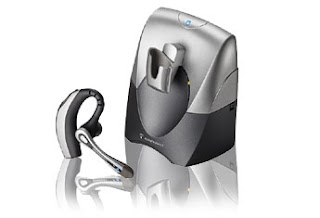
WindSmart provides wind-noise reduction technology, noise-cancelling microphone, 33-foot range, switch between cell phone and your landline wirelessly
Rating:
Cost: $229.99 with RadioShack, $299.95 on Plantronics website
BlueAnt® Z9 Dual-Mic Bluetooth® Headset with Voice Isolation

This is the one I have. It's tiny but you don't have to shout for the other party to hear you. It has some quick and easy buttons and it has a lot of features. The sound quality is excellent on both ends. It comes with a wire to hook it up to the net for updates. The best part? I can use it for a couple days without having to charge it! NOTE: It differs from their other similar headset. Make sure it's the voice isolation set.
Rating:
Cost: $89.99 with RadioShack
Motorola Wireless Headset H375 for Bluetooth-Enabled Cell Phones

Comfortable fit, button dedicated to on/off, compatible with most Bluetooth-enabled phones, good headset for cost
Rating:
Cost: $44.99 with BestBuy
Jabra - BT2040

You never have to charge it because it runs on AAAA batteries, but many complain that the batteries run out quickly. LOW cost at only 20 bucks.
Rating:
Cost: $19.99 with BestBuy
Plantronics Voyager 510S Bluetooth® Headset
WindSmart provides wind-noise reduction technology, noise-cancelling microphone, 33-foot range, switch between cell phone and your landline wirelessly
Rating:
Cost: $229.99 with RadioShack, $299.95 on Plantronics website
BlueAnt® Z9 Dual-Mic Bluetooth® Headset with Voice Isolation
This is the one I have. It's tiny but you don't have to shout for the other party to hear you. It has some quick and easy buttons and it has a lot of features. The sound quality is excellent on both ends. It comes with a wire to hook it up to the net for updates. The best part? I can use it for a couple days without having to charge it! NOTE: It differs from their other similar headset. Make sure it's the voice isolation set.
Rating:
Cost: $89.99 with RadioShack
Motorola Wireless Headset H375 for Bluetooth-Enabled Cell Phones
Comfortable fit, button dedicated to on/off, compatible with most Bluetooth-enabled phones, good headset for cost
Rating:
Cost: $44.99 with BestBuy
Jabra - BT2040
You never have to charge it because it runs on AAAA batteries, but many complain that the batteries run out quickly. LOW cost at only 20 bucks.
Rating:
Cost: $19.99 with BestBuy
Tuesday, October 21, 2008
Text while driving? THINK again!
Reaction time is slowed down by about 35% while texting compared to 12% when drinking and driving (at the legal limit). Texting also worsens steering control by 91%. We all know the perils of drinking and driving, but who would have thought something as innocent as sending a text?
Texting is illegal in only 4 states, including Washington. But most believe it should be illegal in all. According to a recent poll by Daily Fuel Economy Tip, when asked "Do you think it should be illegal to text while driving?”
Do you think before you text?
Texting is illegal in only 4 states, including Washington. But most believe it should be illegal in all. According to a recent poll by Daily Fuel Economy Tip, when asked "Do you think it should be illegal to text while driving?”
- 78% said texting while driving should be illegal
- 19% said texting while driving should not be illegal
- 3% said they were unsure or had no opinion
Do you think before you text?
Subscribe to:
Posts (Atom)